Run receipts
Every long task ends with objective, repo state, files touched, commands run, failed checks, final diff, and the next safe step.
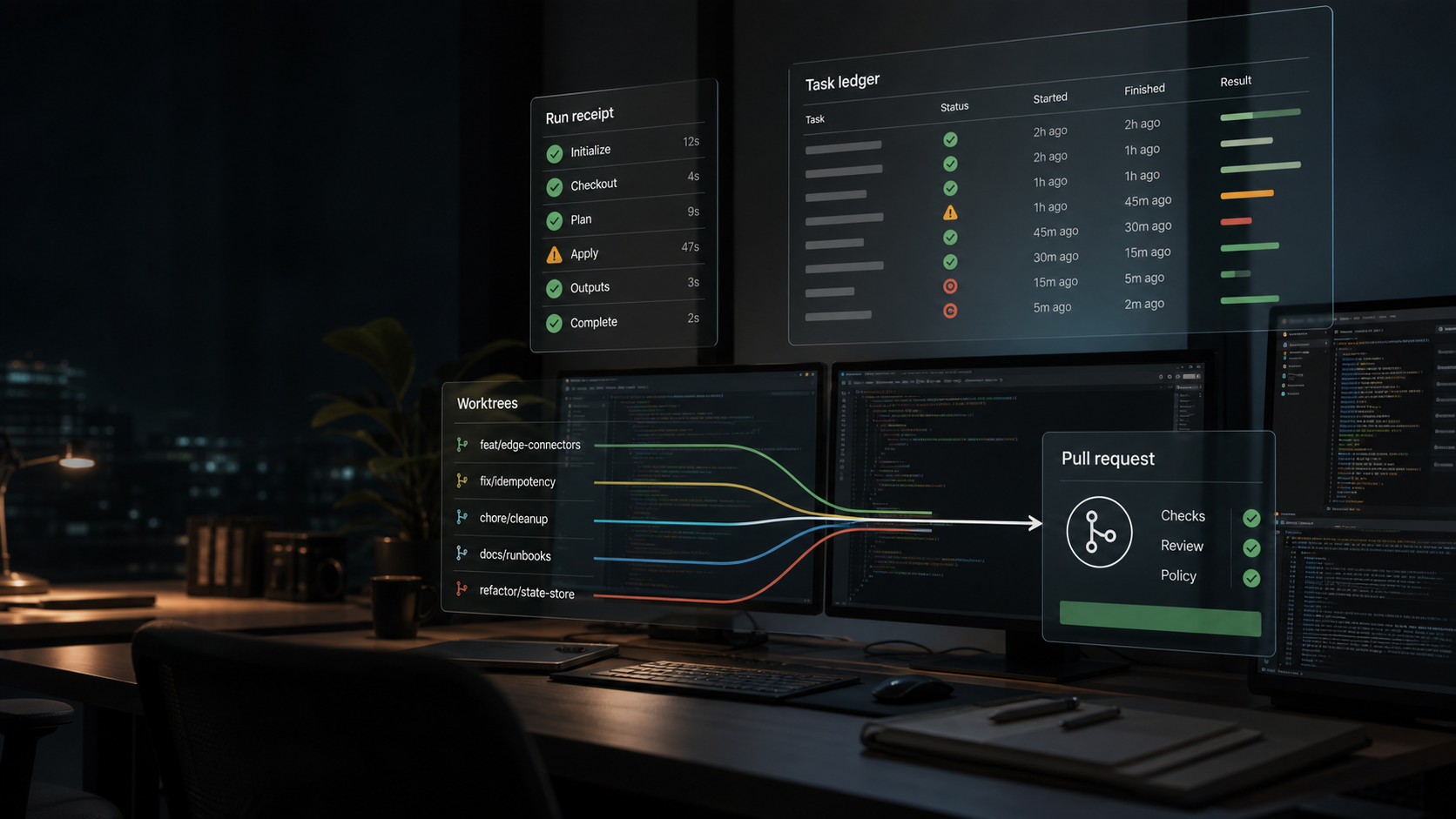
Agent operations for teams shipping with coding agents
I set up the operating layer around your AI coding agents: shared state, worktree isolation, run receipts, review gates, cost routing, and handoff rules that survive the second week of use.
The offer
Teams are buying Cursor, Codex, Claude Code, OpenCode, and local agents faster than they are building the operational habits around them. That leaves duplicated work, mystery branches, stale context, unreviewed generated code, and no clear answer to “what did the agent actually do?”
AgentOps Fieldkit is the week-one fix: I instrument the workflow your team already uses and leave behind receipts humans can trust.
After the implementation sprint, teams can keep the system healthy with weekly workflow reviews, prompt and skill updates, state hygiene, and run-ledger analysis.
What gets installed
Every long task ends with objective, repo state, files touched, commands run, failed checks, final diff, and the next safe step.
Codex, Claude, local agents, and background workers share a canonical task record instead of rediscovering yesterday's context.
Parallel agents get isolated branches, explicit scope, focused tests, and a parent review pass before merge.
Security, data, migration, UX, and ownership checks become repeatable stop conditions, not vibes after the demo works.
Use cheaper models for bounded extraction and stronger continuity for orchestration, with cost per verified outcome tracked.
Each task has accepted inputs, forbidden shortcuts, evidence to produce, and a clear condition for stopping or escalating.
Why this is credible
Persistent shared state across agent sessions, with audit-friendly cleanup instead of deleted history.
Native agent workbench patterns: worktrees, runtime sidecars, QA replay, branch isolation, and focused validation.
A public voice around run ledgers, context accountability, failure receipts, and real machines instead of theater.
Productized pricing
$950
One repo, one team interview, one failure map, and a prioritized operating plan.
$4,500
Implementation in the team's real workflow: receipts, shared state rules, worktree lanes, review gates, and launch docs.
$1,750/mo
Weekly run review, skill/prompt maintenance, state cleanup, cost routing, and adoption support.
Paid entry point
The first purchase should be low-friction but real. The audit turns vague agent unease into named failure modes, evidence, and a decision: stop, fix one workflow, or buy the 7-day implementation sprint.
The audit fee is credited toward the sprint, so the path to retainer starts with paid diagnosis instead of unpaid consulting.
ROI calculator
Start with the audit
The audit turns your current coding-agent usage into a concrete failure map, then recommends whether to stop, fix one workflow, or run the 7-day implementation sprint.
Book the sprint